Direct wallet request
The email carries a destination and instructions. The payer builds or opens the request in a compatible wallet and approves it.
Use email to deliver a complete, verifiable payment request while keeping custody, network choice, wallet approval, and settlement visible.
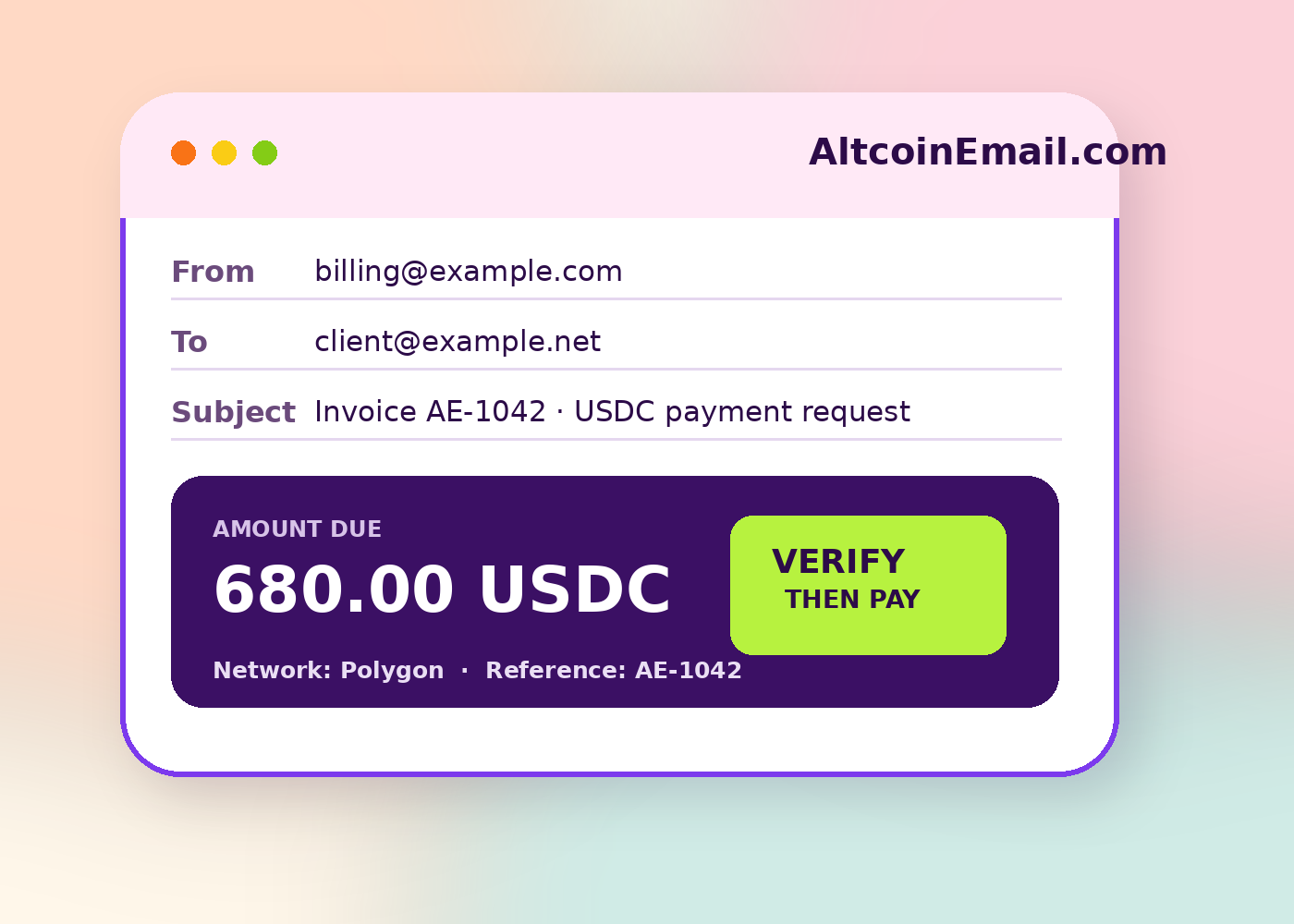
The email carries a destination and instructions. The payer builds or opens the request in a compatible wallet and approves it.
A first-party page validates the invoice and hands a decoded transaction to the wallet. It should retain a plain-text fallback.
A provider associates the email with an account or claim. The message must explain custody, enrollment, identity checks, expiration, and recovery.
A convincing message is not proof. Each stage should answer a different question.
For a new destination, unfamiliar network, or meaningful amount, send a small test after completing recipient verification. Ask the recipient to confirm the exact asset and network before sending the balance.
What invoice, order, project, gift, reimbursement, or payout is this?
Full name, symbol, and contract when a symbol alone is ambiguous.
Full network name and chain identifier when useful.
Token units or fiat pricing basis, rate time, and expiration.
Complete address, required memo, and independent verification path.
Who pays them and whether the exact invoice amount must arrive.
Confirmation target, late-payment rule, and receipt process.
No seed phrases, private keys, recovery codes, or automatic transfers.
Wrong networks, look-alike tokens, expired quotes, exchange withdrawal deductions, compromised email threads, and incomplete records cause more practical trouble than the cryptography itself.
Use an approved asset list, a fixed email template, independent change verification, a wallet preview, and a receipt. Do not make the customer infer the network from a logo or assume that a symbol uniquely identifies a token.
The long-form walkthrough adds recipient handoff, payment-link security, failure modes, and settlement details.
Read the complete safe workflow →Use the invoice guide to connect the email request to a durable reference, due date, pricing basis, confirmation policy, and receipt.